Share Rose N. Kinaga's obituary with others.
Invite friends and family to read the obituary and add memories.
Stay updated
We'll notify you when service details or new memories are added.
You're now following this obituary
We'll email you when there are updates.
Select your format and elements to print
IN LOVING MEMORY OF Rose N. Kinaga
Rose N.
Kinaga
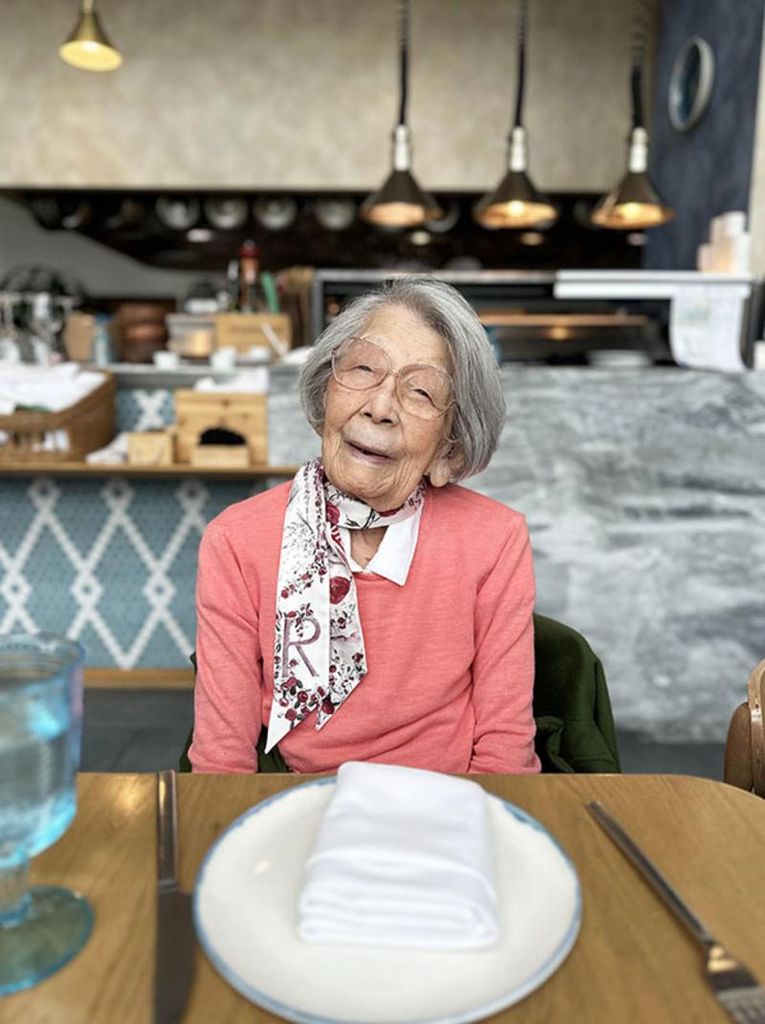
Apr 8, 1923 — Dec 27, 2025
Rancho Palos Verdes
Rose N. Kinaga's Obituary
Harunosuke Nomachi and Miyoshi Yano immigrated from Shikoku, Japan to the town of Winslow in Arizona. There Miyoshi gave birth to a daughter, then a short time after, a son name Junji, nicknamed "Jim".
The daughter was named Rose Isako. Miyoshi named her "Isako" because it means a flower born in a foreign country.
The young family relocated to Hollywood, and Harunosuke with his booming voice and gregarious personality entered the produce business. Miyoshi was quiet, studious, had excellent penmanship, and was a meticulous seamstress.
We're not exactly sure why Hollywood was chosen, but know there were other Japanese families who lived in the neighborhood. Mom joined a JA congregation in a Presbyterian church.
Mom described growing up in Hollywood. She and her girlfriends—all daughters of Japanese immigrants-- would window shop along glamourous Hollywood Blvd. Would that later impact Mom's sense of fashion, and her desire and ability to recite song and verse Amy Vanderbilt's lessons about proper etiquette as she later raised her children?
Mom loved food. She'd describe her favorite snack growing up--cut a fresh tomato into two halves, and pour a little salt on the top.
Mom was a student at Hollywood High when Pearl Harbor was bombed. The phone rang that day or maybe the next. A reporter asked for her family's reaction. Mom later believed the reporter called Japanese sounding names from the phone book. Mom, who'd never spoken to her folks' relatives in Japan, thought about the young soldiers lost, the devastation, and replied, well, it's just horrible.
But the newspaper reports and hearing about fathers being taken away foretold the mass round up. om's family packed their one suitcase per person following the orders to report for evacuation. They truly didn't know hat would happen next.
Mom and her family were bussed to temporary "living quarters" at the Santa Anita Race tracks. Among barracks quickly erected among the horse stalls. Long lines for everything—to use the out houses, to take a shower among strangers, to wait for your food.
Months later, her families was among the hundreds put on trains with shades drawn, for a long ride to Heart Mountain in desolate Wyoming.
She recalls the sentries, the barbed wires. Her parents didn't talk much, and quietly sat with others from their generation, speaking Japanese.
The families ate in large mess halls, and lived in tar paper barracks. Again the long lines. And it was so cold.
Mom's generation tried to replicate what it might be like outside the barracks. They formed basketball and baseball teams, boys and girls clubs—social clubs—and arrange dances, wearing their "Sunday best".
Thomas Kinaga had been born and raised in San Jose. His family was first put into barracks at the Tanforan race tracks, then taken by train to Heart Mountain.
Quiet and serious Thomas—maybe because he was tall for his generation (Nisei)—became president of the Heart Mountain Boys Club.
Outgoing and bubbly Mom became president of the Heart Mountain Girls Club.
Tradition would have it that the respective presidents of the Boys and Girls clubs would begin festivities by dancing the first dance.
And that's how they met.
Not too longer after their romance began, a recruiter from the Army asked if any young man would like to join a new segregated unit being formed of all Japanese Americans. My dad raised his hand. Mom supported his decision.
When he left, there were no promises made about the future.
That parting scene—Dad was on a mission as an American fighting for democracy. In that scene as he was about to leave prison to join the Army, he saw Mom as one of the smartest and resourceful young women he'd ever met. With a great personality.
In that parting scene, Mom saw Dad as a serious young man who was a natural born leader. Serious but who had another side who liked to sing and dance. Maybe he'd become an engineer—his favorite hobby was building and designing paper airplanes.
Dad then joined scores of other JAs from other camps and Hawaii to fight in Europe. Together they formed the heavily decorated 442.
Back in prison, Mom and other young women sewed camouflage tents for the Army. She thought about Dad She felt he'd survived, that he'd come back.
Mom and her family were eventually relocated from Heart Mountain prison to the University of Michigan, where her father worked as a custodian.
And yes in the next scene just after the war, Mom and Dad were reunited. They married in Las Vegas, Dad obtained his undergraduate degree from Cal, then a master's from Stanford. They moved to Pasadena, where their first child (Mary) was born. They then relocated to a Japanese American enclave in Venice.
The family grew with the birth of Patricia and Robert. Throughout the years, our folks devoted many hours to support the 442 veterans network throughout the country, especially in Hawaii and Southern California. Although Dad passed away before Congress decided to bestow the Congressional Gold Medal on the 442, Mom proudly traveled with our family to DC to accept the award on Dad's behalf. She was thrilled to meet one of the bill's co-sponsors Adam Schiff in his chambers.
Bringing us back to the 1960s—
Dad obtained a second graduate degree from UCLA, which bestowed upon Mom an honorary degree called "PHT"—Pushing Hubby Through.
Mom attended Pasadena City College for a short time but raising three small children was of course no small feat and she ended up focusing on becoming the supermom homemaker.
Dad did indeed become an engineer—an aerospace engineer.
After Venice, we lived for a few years to South LA, across the street from a junior high school. During the Watts civil unrest, the National Guard camped in the school's parking lot,
That was a difficult time, and our folks relocated us to Palos Verdes on account of its public school system.
As we children grew older, Mom branched out a bit. She took up ikebana—flower arranging.
After we all entered college, Mom volunteered to teach English to children of Japanese auto executives living in Palos Verdes. She exchanged letters with her students as they relocated back to Japan, got married and had children. As a teacher she followed a maternal lineage of educators, which included her mother, grandmother and great-grandmother (who'd organized a school in Japan).
Later, Mom continued her interest in helping others as a volunteer at the Little Company of Marry hospital.
Following his retirement, Dad obtained another undergraduate and graduate degrees in Asian American Studies from California State University Long Beach.
He and Mom shared a passion for learning and later enjoyed attending seminars hosted by higher education institutions.
Her self-described keys to a long life?
--One, her love of learning. She'd read the LA Times cover to cover, and stayed current on everything going on in Washington and the world.
--Second, take up hobbies—she became a certified foodie/her favorite past-time was to go to restaurants and she loved watching cooking shows on TV. By the way, would want everyone here to go to the Chinese restaurant following this Celebration—Peter has the details. In fact, Mom would be sorely disappointed if you didn't join us, because of the JA tradition that we eat Chinameshi after funerals. So hope to see you there.
--Third, don't do too much. Take time to enjoy life, smell the roses
--Fourth, and this was a big one--laughter—her favorite show was "I love Lucy". Her best friend Tomi Kasai who she knew for over 70 years—were Lucy and Ethel personified. Their kids Sharon, Glenn and Gary and Mary, Bob and myself would sit on the grass in front of our houses, entertained by seeing our mothers constantly chatting it up, laughing with each other
--And finally, her love of people. And that included strangers. She often walked the Del Amo shopping mall, in later years with her brother Jim. Then she'd sit and rest. She'd strike up a conversation with anyone who ended by chance sitting momentarily next to her. She'd spend ten minutes chatting with these new friends—she was the consummate cross examiner. Within those ten minutes she'd know your name and—what a memory-lock down essential facts about you.
Her friends gave her sustenance. Most have passed on but just the day before she passed—her bff Mrs. Kasai, Mrs. Kasai's son Glenn and daughter Sharon were able to visit Mom. Mom also had good friends in Mr. Cole and Mrs. Woosley, and her friend Anne.
And of course her family. Her brother Jim was in many respects her best friend in life. She helped out at his market in Watts, and his liquor store which he opened up in Torrance. After Uncle Jim passed, his son/my cousin Bruce took wonderful care of Mom. Spending countless days and nights for years during and after COVID to care for her.
As Bob, Mary and I got married and had children, and their children are now having children….our family has grown, and has included those who spent so much of their love with her throughout the years, including—Christian and my husband Peter.
When Rose turned 102 years young, the City of Palos Verdes Estates honored her with a parade and special certificate presented by the Mayor.
Mom was quite healthy during her 102nd year. She was eating applesauce the day before she passed. No major aliments. Her clock simply stopped ticking. She'd been lovingly supported by her caregivers, especially Sharon and Sharon's daughter Anna and Gloria, and Mom's hair stylists Etsuko and Niko Niko were part of Mom's circle of friends.
Mom passed on last Saturday. The previous Sunday she asked me and my son Brandon, if we were there in body and soul…at the time we weren't sure what she meant, but we realize now that she wanted us to help on her final journey.
Within a few hours before her passing Mom, always the consummate fashion maven, asked where her shoes and purse were…and said she was ready to get off at the next stop.
When she passed on, Mom was surrounded by my sister and brother, Mom's granddaughters Quinn and Carly, and close family friends Vivian and Larry Butt.
Mom then joined our Dad who'd passed in 2010.
Mom had nine grandchildren, and three great grandchildren.
On behalf of Mom-and Dad- thank you for being here.
In lieu of flowers or koden, the family requests donations to the California State University, Long Beach (CSULB) Asian and Asian American Studies Department (AAAS) General Fund. On his retirement with Rose's blessing, Thomas Kinaga received his second B.A. and M.A. from CSULB in Asian Studies.
To give online, go to: https://giveto.csulb.edu/cn/(S(x0xcmjv4a1fflanhpisr0ni0))/
Step 1: Scroll and select "College of Liberal Arts"
Step 2: Scroll and select "Asian and Asian American Studies Department"
Step 3: Select "Asian and Asian American Studies Department" the first option for general giving.
Step 4: In the next page, please write in the note section "in memory of Rose and Thomas Kinaga" to track the gift.
To give by check, please make the check payable to the Long Beach State Foundation and fill out a CSULB Gift-Pledge Form to track the gift. We will have copies of the Gift-Pledge form at the memorial service on Friday.
Rose N. Kinaga's Guestbook
Visits: 525
This site is protected by reCAPTCHA and the
Google Privacy Policy and Terms of Service apply.
Service map data © OpenStreetMap contributors