Share Meriko Fujita's obituary with others.
Invite friends and family to read the obituary and add memories.
Stay updated
We'll notify you when service details or new memories are added.
You're now following this obituary
We'll email you when there are updates.
Select your format and elements to print
IN LOVING MEMORY OF Meriko Fujita
Meriko
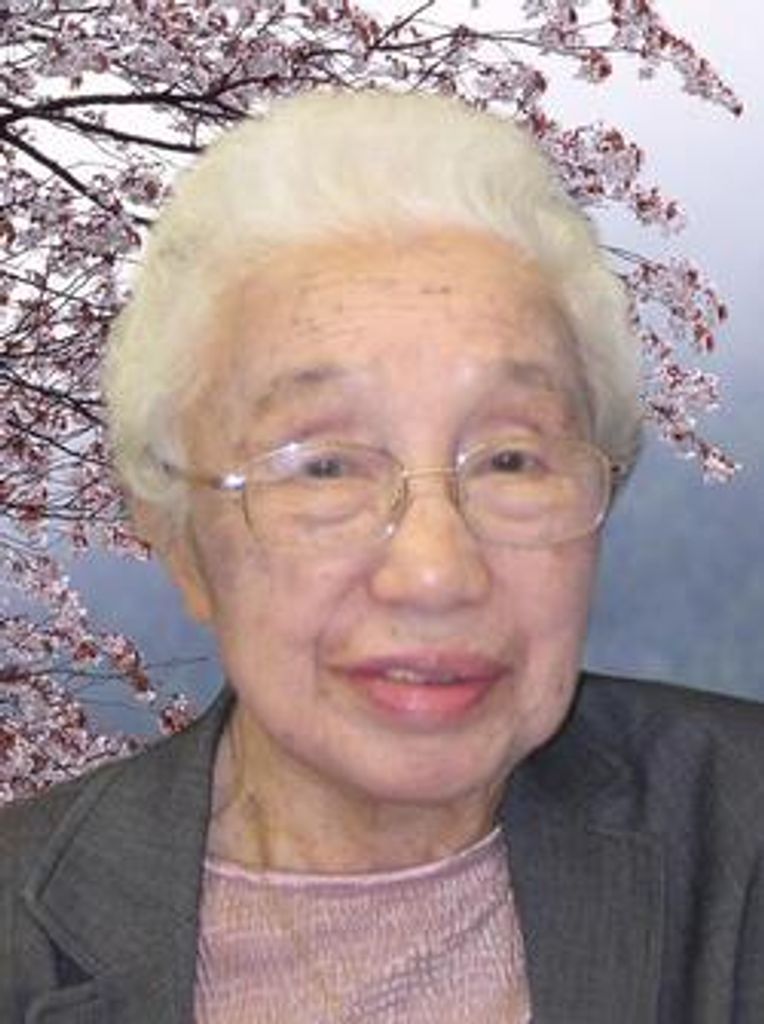
Fujita
Dec 3, 1918 — Mar 1, 2014
Meriko Fujita's Obituary
Meriko Fujita was born in Stockton, California, the oldest of four daughters of Matsutarô and Katsuno Fujita. When she was five, her mother returned to Japan with the children and raised them in Wakayama Prefecture. Matsutaro worked as a laborer in California to support his family and visited them in Japan a few times. This was not an uncommon practice in those days; many Issei wanted their children educated in Japan, and it was easier for a man alone to move around quickly to take advantage of job opportunities.
In the mid-1930s, after completing jogakkô (analogous to high school), Meriko came to the United States to spend some time with her father. She lived and worked for a time on Terminal Island, in San Dimas (with a family who grew flowers), and in Pasadena as a "school girl" for the Japanese Consul General. Around this time, all three of her younger sisters died of illness in Japan. As U.S.-Japan relations deteriorated, her father decided to send Meriko back to Japan, so as not to leave her mother alone. They spent the war years separated, Meriko with her mother in Wakayama and her father in the U.S. in internment camps. Though all three survived, Meriko and her mother lost all their possessions in the bombing of Wakayama toward the end of the war.
Meriko had met her future husband Minoru Shinohara on the ship returning to Japan before the war. He was a graduate of what became the Merchant Marine Academy and was serving on the ship as a lieutenant. When they landed in Yokohama, Meriko also met his younger sister, with whom she became friends. Minoru was drafted into the Imperial Japanese Navy and served in the Pacific theater. As war ended, he became a prisoner-of-war in Australia and returned to his home in Yokohama sometime in 1946. Soon thereafter, he travelled with his older brother to Wakayama to ask Meriko to be his wife. They established their home in Yokohama, where she gave birth to two daughters; he subsequently took her last name, becoming Minoru Fujita. They learned the whereabouts of Meriko's father in the U.S. through the Red Cross and were able to contact him. In 1953 they immigrated to America and joined him.
The family lived for a time in Monterey before settling in the San Gabriel Valley in the mid-1950s, first in San Gabriel then in Rosemead. Meriko was primarily a homemaker, wife, and mother, devoting herself to the care of her family and parents, though she also worked part-time outside the home for a few years. She and her husband moved to San Bernardino in 2001 to be close to their daughter, then moved to Highland in 2009.
In the 1960s she introduced her husband to tanka , a form of traditional Japanese poetry. They became active in tanka poetry circles in Southern California, eventually starting their own group, the Joshua Tanka Society. His poems were selected three times for the New Year's Imperial Court Poetry Reading event ( utakaihajime ), a singular honor of which Meriko was very proud, having been her husband's original tanka instructor. After his death in 2005, Meriko continued her ongoing activity as a poet in her own right and hosted regular poetry meetings of the Joshua group until a stroke disabled her in 2009. On March 1, 2014, she went to join her parents, sisters, and husband, gently ending a life spanning 95 years and some of the most momentous periods in the history of both Japan and the U.S. It was a remarkable, if quiet, life for which her family gives heartfelt thanks. She continues to live in our hearts and share her joy and love with us.
Meriko Fujita's Guestbook
Visits: 2
This site is protected by reCAPTCHA and the
Google Privacy Policy and Terms of Service apply.
Service map data © OpenStreetMap contributors