
Share Martin Yoneo Iguchi's obituary with others.
Invite friends and family to read the obituary and add memories.
Stay updated
We'll notify you when service details or new memories are added.
You're now following this obituary
We'll email you when there are updates.
Select your format and elements to print

IN LOVING MEMORY OF Martin Yoneo Iguchi
Martin Yoneo
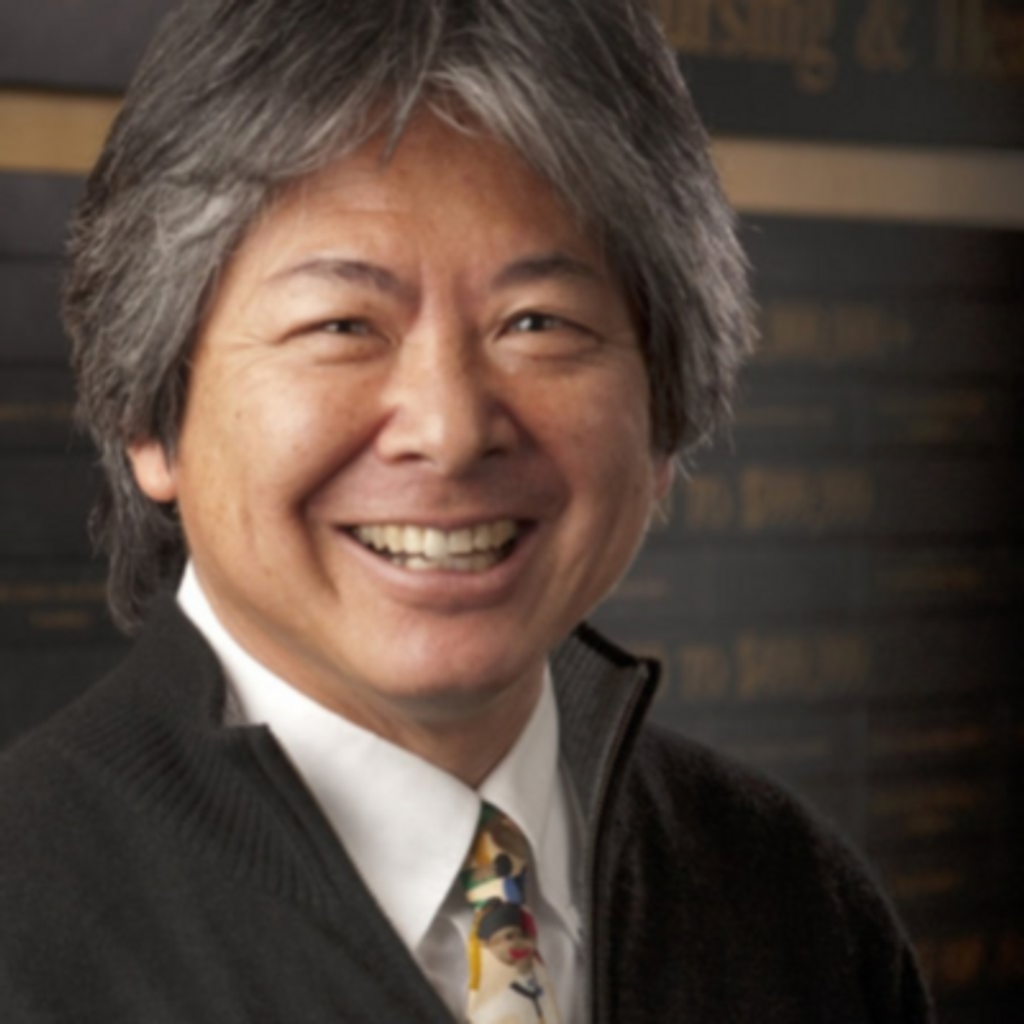
Iguchi
Apr 19, 1955 — Jun 5, 2021
Los Angeles
Martin Yoneo Iguchi's Obituary
It is with profound sadness that we share the news that Martin Y. Iguchi, PhD, a pioneering clinical scientist and a lifelong champion of equity and racial justice, died after a lengthy illness on June 5, 2021. At the time of his death, Dr. Iguchi was the Senior Behavioral Scientist at the RAND Corporation and Director of Redesign for the Pardee RAND Graduate School of Public Affairs.
Iguchi possessed a rare blend of empathy, generosity, humility, and unstoppable drive that animated a career spanning nearly 40 years in behavioral health research and practice.
He grew up in Los Angeles, CA in a tight-knit immigrant family and graduated from Vassar College. He received his Ph.D. in Experimental Psychology from Boston University, where he also began teaching. Dr. Iguchi's post-doctoral training and clinical work taking care of patients in underserved areas of Baltimore and Philadelphia during the height of America's crack cocaine and AIDS crises cemented his career-long interest in addiction.
After his postdoctoral training at Johns Hopkins, he designed and implemented the first methadone program in Camden County. There, he would spend his own modest salary to ensure the payment of incentives to methadone clients participating in one of the very first contingency management treatment programs.
In 1997, his ongoing interest to improve policy and the lives of those suffering with addiction propelled him to RAND, where he took the reins as Co-Director of RAND's Drug Policy Research Center. Through Dr. Iguchi's leadership, the Center gained international visibility for methodologically-rigorous drug policy research and an exceptional incubator for careers of numerous investigators. Dr. Iguchi's contributions and passion for positive change led to leadership roles in the College on Problems of Drug Dependence (CPDD), American Psychological Association, and shaping the research priorities of the National Institute on Drug Abuse—a part of the National Institutes of Health.
It was during the initial phase that Iguchi laid the groundwork for increasing racial and economic diversity in health policy research and promoting what would become known as community-based participatory research (CBPR). He also became committed to advancing research on the role of the criminal legal system as a driver of health disparities.
Iguchi continued his academic career in the Department of Community Health Sciences in the School of Public Health at UCLA, becoming involved in the UCLA Clinical Scholars Program and serving as a Core Scientist in UCLA's Center for HIV Identification, Prevention, and Treatment Services. Overtime, the programs he led and supported helped to recruit thousands of high-risk people into HIV care and substance use treatment. Linking global to local, he sought to apply lessons from his work in the United States to address the health needs of vulnerable and stigmatized groups in international settings.
Amongst numerous other projects, he helped develop a pioneering Master's program in Addiction Studies at Ilia State University and measures to distribute clean injection equipment and HIV testing kits through vending machines in the Republic of Georgia. His ability to maintain a first-rate portfolio of domestic and international scholarship, while also serving as an excellent teacher, mentor, academic citizen, and administrator, earned the confidence of the Department of Community Health Sciences at UCLA, where he served as Chair from 2009 to 2011.
His reputation as an exceptional academic leader led him to be recruited by Georgetown University to serve as Dean of its School of Nursing and Health Studies. At Georgetown, Iguchi deployed his skills as a technological visionary to develop what would become an early model for on-line learning platforms in health sciences. However, his most important legacy at the School is in reinvigorating its focus to global health and social justice efforts. This reflected a melding of Dr. Iguchi's personal concern about the health needs of vulnerable people with Georgetown's Jesuit roots. While in DC, he never lost his connection to the HIV/AIDS community, becoming closely involved with the District's Center for AIDS Research. After his tenure in DC, Iguchi returned to RAND to help reimagine its graduate education efforts.
Iguchi's contribution to research on addiction and its sequelae is immeasurable. He has been a Principal Investigator on dozens of projects, with funding amounts totaling over $18 million. He authored over 150 peer-reviewed publications, cited 6,000 times and counting.
Among the defining accomplishments of his career was the centering of patient experiences in methadone maintenance and HIV treatment. His concern with the particular vulnerability of racial, ethnic, and sexual minorities in domestic and international settings became a thread discernable throughout his life.
Iguchi was a pillar of the Asian-Pacific Islander Community both inside and outside of academia. During his time at Georgetown, he became involved in the US-Japan Council and the Japanese American Citizens League, accompanying Irene Innouye's on one of her American Leadership Delegations to Japan. Through his research, he helped identify ways to break down barriers to treatment entry for Asians and Pacific Islanders.
He has been an invaluable mentor to scholars of color and a role model to first generation researchers. Iguchi served on numerous journal editorial boards, advisory boards, and scientific review panels. His dedication and humanism have been recognized with countless prestigious awards. This includes a recent (2019) APA Presidential Citation, noting not only his research contributions, but his exceptional leadership in the field of Psychology.
Iguchi's focus on the function of race, racism, and contact with the criminal legal system has helped to advance the recognition of these structural factors in behavioral science research. His work in these areas continues to vitally inform current academic debates.
Iguchi's tremendous academic and scientific accomplishments are complemented by his multi-faceted personality. He was an avid lover of nature and the arts. His appreciation for modern dance brought him together with his wife Beth—a dancer and dance teacher. He was passionate about biking, travel, and reading—and always the life of the party.
Iguchi is survived by his wife Beth, daughter Sarah, son Benjamin, his brothers Lester and Wesley and sisters Eileen and Julie. He was predeceased by his father Yoneo, mother Grace and brother Reggie.
In lieu of flowers, Iguchi's family is suggesting a donation to the Center to Advance Racial Equity in Policy at RAND, by using the link www.rand.org/iguchi. A celebration of Martin's life is being planned at RAND at a later date.
Please click and fill out the form below if you would like to be kept in the loop about future efforts to celebrate Martin Iguchi's legacy.
Martin Yoneo Iguchi's Guestbook
Visits: 62
This site is protected by reCAPTCHA and the
Google Privacy Policy and Terms of Service apply.
Service map data © OpenStreetMap contributors