Share Hideo Bill Kikuchi's obituary with others.
Invite friends and family to read the obituary and add memories.
Stay updated
We'll notify you when service details or new memories are added.
You're now following this obituary
We'll email you when there are updates.
Select your format and elements to print
IN LOVING MEMORY OF Hideo Bill Kikuchi
Hideo Bill
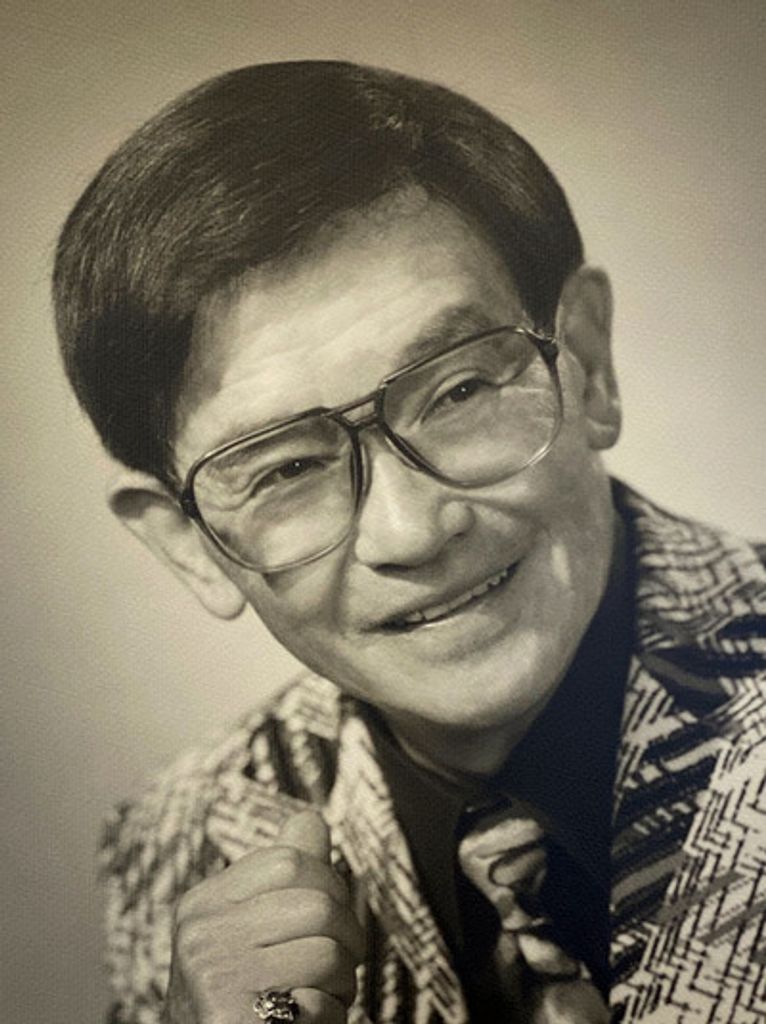
Kikuchi
Jan 1, 1923 — May 2, 2020
LOS ANGELES
Hideo Bill Kikuchi's Obituary
Services are pending for HIDEO BILL KIKUCHI, a resident of Los Angeles who passed away at the LAC-USC Medical Center on May 2.
HIDEO BILL KIKUCHI BIOGRAPHY
Hideo was born in Stockton, California on January 1, 1923 to Iwao and Toki Kikuchi. At 4 years old, his family moved back to Odawara City, Kanagawa-ken, Japan. They lived with his mother's family (Katayama) who grew rice and had a pear farm. While there, his brother, Hidemi, was born. He was 8 and his brother 2 yrs. old, when his parents went back to California to continue working at two different farms. He and Hidemi were left to be raised by their grandfather, Uhe, along with 7 aunts and uncles. Hideo admits he was lazy and quite spoiled during this time and enjoyed studying kendo. He can't remember all his relatives but his favorites, "Matchan" grew Fukumatsu pears and Yoshio "fune-ojisan" worked as a cook on a Japanese Naval ship. The family cemetery is in Sobi Odawara, Kanagawa Prefecture.
After graduating Odawara Commercial High School, Hideo heard rumors that the U.S. and Japan relations were breaking down and they noticed that less ships were going to and from the U.S. He wanted to return to his birthplace so in December 1939, leaving his younger brother behind, Hideo boarded what was to be one of the last passenger boats sailing from Japan to San Francisco. He recalls the trip took so long that he turned 17 yrs. old on January 1, 1940 while still on the ship. His parents were waiting for him and brought him to live with them at the Chigokuya Hotel in Los Angeles, located in the area now known as Little Tokyo, just one block from Zenshuji Soto Mission. In January 1940 he entered Maryknoll School to learn how to speak English and transferred to Belmont High School to further his English studies. 1 year later, Pearl Harbor was bombed.
In February 1942 when Executive Order 9066 was signed, Hideo voluntarily entered the Manzanar Wartime Relocation Center in California and his parents followed soon after. A year later, when Hideo refused to join the U.S. Army, he was labeled a "No-no Boy" and was transferred to Tule Lake Relocation Center in California where dissidents who became troublesome were housed. He became quite rebellious when asked questions such as "will you prove your loyalty to your country by joining the Army and will you shoot your brother who is a Japanese Citizen for us"? This camp was scheduled to be closed so in May 1946, so he was again moved to Crystal City Relocation Center in Texas where he met his wife to be, Maria Victoria Shizuka Naganuma. This camp was designed as a prisoner of war camp for the South Americans of Japanese descent (mostly Peruvian), Italian Americans, German Americans & some Jews. In September 1947, he was transferred to San Diego Immigration Center, Linda Vista, California. Because of his defiant nature, he was scheduled to be deported to Japan along with 2 others placed on a blacklist but fortunately, he was finally released and returned to Los Angeles.
His memories of camp life include joining the band in each camp, learning Judo and watching American movies. He and his friends had a club called the "YMGA" which stood for Young Mens Gambling Association". They dug holes under their barracks to sneak into each other's barracks for games late at night. He worked maintaining the boilers so everyone could take hot showers and was paid $32 a month. He was also a Personal Butler to the head of the camp's wife as she was pregnant and needed assistance during that time. His father worked in the camp dining room and his mother worked in the shoe repair barracks. In Crystal City, he said it was nicer as their barracks included a kitchen with a gas stove. He remembers Shizuka working for the camp dentist.
After the Naganuma family was released in 1947 from their relocation camp in Texas, Shizuka went straight to Los Angeles to join Hideo while her family settled in San Francisco. After almost getting deported to Peru, Shizuka found sponsors to assist her and In April 1948 she married Hideo.
Hideo worked for a friend who would pick him up and take him to work at his vegetable stand in Hollywood. This is where he learned about becoming an entrepreneur. With the assistance of the Tsukada Family loaning him start up money, in 1951 he realized his dream when he opened his first neighborhood grocery store in East Los Angeles, later moving it to a larger location where he added full butcher's service. He and Shizuka ran their own business and started their family in 1954 raising 3 children – Steve, Elsie & Joe. Customers loved that Shizuka could speak Spanish, so Hideo also learned to speak Spanish from his customers to help him become more successful.
Hideo is credited with developing entertainment in the Japanese-American community. In the 50's and 60's, when there were no local professional Japanese performers or artists, he produced live shows at a local temple for those who could only speak Japanese. For 40 years, he brought Japanese entertainment to our community. He was in one of the Nikkei Big Bands, playing saxophone and clarinet. Besides playing in the temple, the various entertainers would perform in the summer at picnics in Elysian Park for various Kenjin-Kais. Everyone enjoyed the traditional Japanese music and dance performances. Hideo would show off other talents he had in between stage changes, like comedy skits, juggling, magic – he even had a ventriloquist act! Hideo served as an emcee on countless occasions even serving honorably for the Golden Anniversary Royal Dinner of the Japanese Emperor and Empress at the Biltmore Hotel in 1974.
He was the president of the Nagauta Kensho-kai, a form of Japanese classical music group from January 1969. Also from 1971 till just a few years ago, he headed the Nisei Week Japanese Festival Ondo Committee. He was known for keeping harmony among the numerous dance teachers and also coordinated them for the Nisei Week Grand Parade and the Street Ondo which wrapped up the festival. Nisei week honored him and recognized his contributions when he was selected as one of the Nisei Week Pioneers in 2000 and again in 2010, as the Festival Grand Marshall. He was also a member of the Taisho Club, which is the largest Japanese American association of hobbies and was the entertainment-bu president for 3 years.
Hideo continued to produce Japanese singing competitions into his eighties since there were still so many Japanese American seniors who looked forward to seeing live performances in Japanese. He also made sure to arrange performances at the Keiro Nursing Home for those who could not leave their facilities. He eventually became a resident of Kei-Ai himself where we were told he was one of their favorite residents – EVEN THOUGH he once escaped in his wheelchair but was caught in the parking lot. He will be missed by so many in the Japanese American community.
He is survived by his sons, Steven Hisao (Janie) and Joseph Yukio (Pauline) Kikuchi; daughter, Elsie Akemi (Chuck)
Spallone of Arizona; grandchildren, Jared, Lauren, Brandon (Candace), Brittany (Zach), and Bailey Kikuchi and longtime family friend, Hisako Matsumoto.
Hideo Bill Kikuchi's Guestbook
Visits: 30
This site is protected by reCAPTCHA and the
Google Privacy Policy and Terms of Service apply.
Service map data © OpenStreetMap contributors